
A canine that performs too tough with others is an issue that builds quick. One minute, the canine are operating and chasing, the subsequent, somebody’s yelping, one other proprietor is trying over with concern, and also you’re attempting to determine get management of a state of affairs that escalated earlier than you even noticed it coming. Understanding why it occurs is step one to really stopping it.

It’s Essential to Perceive What You’re Really Seeing
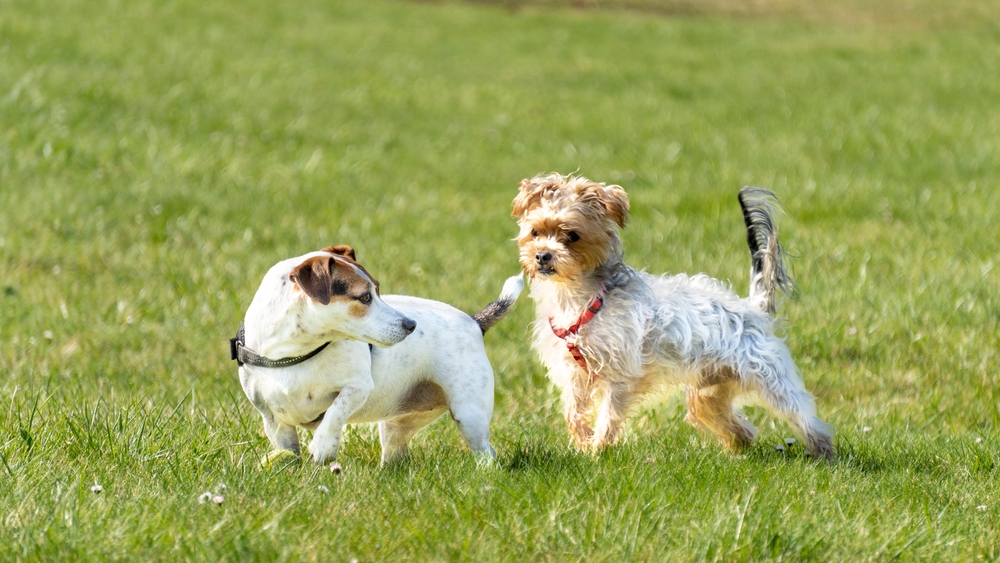
Tough play and aggression aren’t the identical factor, and that distinction issues for a way you reply. Canine which might be taking part in, even boisterously, usually present unfastened, relaxed physique language. Tails wag in huge arcs, mouths hold open, and actions are bouncy and reciprocal. When play begins tipping into one thing extra critical, the physique stiffens. The tail might rise and transfer in tighter, stiffer wags. The mouth closes. Eye contact turns into mounted fairly than informal.
Overexcitement is the most typical offender behind tough play. Some canine merely have a tough time self-regulating as soon as they hit a sure power degree, and with out an proprietor stepping in, the state of affairs escalates. It’s additionally value realizing that sure breeds are naturally extra boisterous. Terriers, herding breeds, and dealing breeds have a tendency towards rougher, extra persistent play kinds. That doesn’t make the conduct acceptable, but it surely does assist clarify why some canine want extra lively administration than others.
What to Do within the Second
The best rapid device it’s a must to assist stop your canine from taking part in too roughly is a dependable recall, a phrase or phrase your canine is skilled to reply to that brings them again to you. One thing so simple as “come” or “right here” works, so long as it’s been practiced constantly earlier than you want it in a high-distraction setting like a canine park. When your canine responds and returns to you, that break within the motion offers each canine an opportunity to reset.
If recall isn’t working but, or if issues have escalated too shortly, a distraction may also help redirect your canine’s focus. A high-value deal with, a favourite toy, or perhaps a sudden sharp noise can interrupt the momentum. After you have their consideration, get a leash on them and create some bodily distance between them and the opposite canine.
For conditions which have gone past a distraction or recall being sufficient, a bodily barrier helps. An umbrella, for instance, might block the canine’ line of sight, take away the visible set off, and maintain you out of the center of the state of affairs whilst you work on separating them.
The Setup Modifications That Stop It within the First Place
Managing tough play reactively is beneficial, however adjusting how and the place your canine performs is what creates lasting change. Massive group play environments are more durable to oversee and simpler for canine to get overstimulated in. In case your canine struggles with self-regulation, smaller, extra managed play conditions with one acquainted canine are a greater place to begin than a busy off-leash park.
A well-fitted harness is value having in your canine throughout play classes the place tough play is a threat. It offers you a safe level of management if you should bodily separate canine, and it’s safer to seize than a collar throughout a heated second. The opposite canine’s proprietor ought to have a leash accessible too, so each canine may be managed if issues escalate.
Retaining group sizes small and selecting play companions thoughtfully takes quite a lot of the guesswork out of the state of affairs. Not each canine is an efficient match for each play type, and pairing a extremely excitable canine with a calmer one typically ends badly for each.
Reinforce What You Need to See
Probably the most easy issues homeowners overlook is rewarding calm, applicable play. In case your canine is interacting nicely, settling after being recalled, or checking in with you throughout a play session, mark that with reward or a deal with. Positive reinforcement throughout play isn’t only for formal coaching classes. It builds the behavior of your canine seeking to you for suggestions throughout high-energy conditions, which is strictly what you need.
Instructing a stable recall takes constant apply, ideally beginning at residence with minimal distractions and progressively working as much as extra stimulating environments. In case your canine received’t come when known as in a quiet setting, they’re not going to return when known as at a canine park. Construct that basis first earlier than counting on it in troublesome conditions.
When to Step Again From Play Completely
In case your dog is still vomiting, constantly unable to settle down after being separated, exhibiting stiff or aggressive physique language fairly than unfastened playful power, or if different canine are usually exhibiting indicators of concern or stress round them, it’s time to pause open play classes and seek the advice of knowledgeable coach or your vet. Some canine want extra structured behavioral work earlier than group play is acceptable, and that’s not a failure. It’s simply an trustworthy evaluation of the place your canine is and what they want.
Tough play is widespread. With the proper instruments, most homeowners can get it underneath management earlier than anybody will get harm.
Featured Picture Credit score: sophiecat, Shutterstock
Did You Know?
- Our brand-new posts are rounded up and included in our weekly emails. Don’t miss out on the most recent – sign up for our newsletter beneath!
Trending Merchandise

ZuPreem FruitBlend Bird Pellets, Daily Bird F...


ZuPreem Sensible Seed Bird Food, Parakeet, Bu...

Kaytee Forti-Diet Pro Health Egg-Cite Nourish...

Best Nest Wellness Mama Bird Probiotics ̵...


Kaytee Fiesta Macaw Food, Nutritious and Fun ...

Pet Eye Cream Health for Dogs, Cats, Cattle, ...

